
Book- Wired To Game Resources
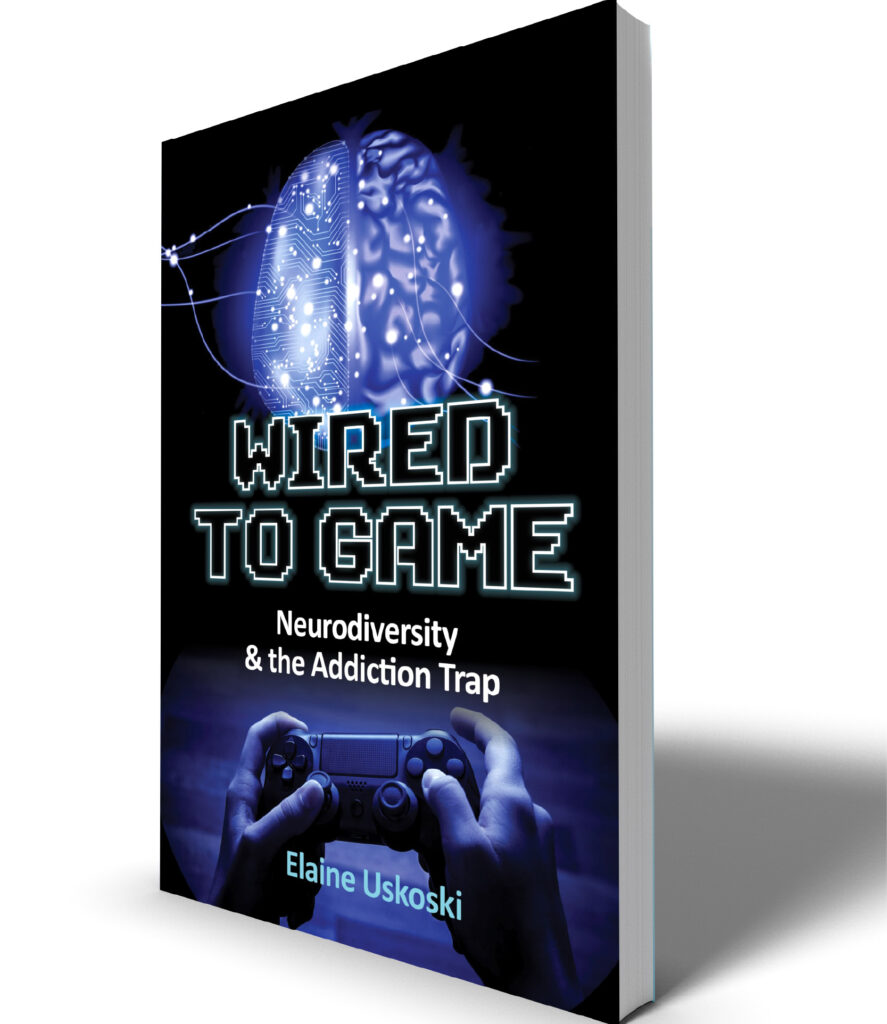
Wired To Game
Neurodiversity & the Addiction Trap
The resources included in this section are some of the websites, books, videos, apps, and programs I have found to be the most helpful in supporting neurodivergent individuals and their families. While this is not a comprehensive list, each resource has either been recommended by trusted professionals or has proven valuable through my own experience as both a parent and a video gaming addiction coach. My hope is that these resources will continue to educate, encourage, and equip you with practical strategies long after you have finished reading this book.
Quick Links
Websites for Parents | Apps for ADHD Students | Mood Tracking Apps | ADHD Coaching for Students | ADHD Books for Parents/Clinicians | Books for Children, Students, and Young Adults | Video Series | Social Skills Resources for Neurodiversity | Support Services for Video Gaming & Screen Addiction | Gaming Addiction Residential Treatment Centres & Digital Detox Camps | Books on Gaming/Screen Addiction | GAP Year Programs
Websites for Parents
These organizations offer articles, webinars, courses, parenting strategies, and expert advice to help families better understand neurodiversity, strengthen executive functioning, manage challenging behaviours, and support their child’s long-term success.
Adults with Attention-Deficit/Hyperactivity Disorder (CHADD): https://chadd.org/
Inside the ADHD mind: https://www.additudemag.com/
Centre for ADD/ADHD Advocacy, Canada: http://www.caddac.ca (Contains information for adolescents, adults, university students, ADHD coaching, neurodiverse workplaces, and more.)
Impact Parents: https://impactparents.com/
Everything You Need to Know about ADHD (Overview of Attention Deficit Hyperactivity Disorder):
https://www.healthline.com/health/adhd
Childmind Institute: https://childmind.org/topics/adhd-attention-problems/
Parenting Kids with ADHD: https://parentingkidswithadhd.com/best-adhd-resources-for-adhd-parenting/
Support for Autism: https://www.autismlevelup.com/#community
Psychology Today has a global reach, with its therapist directory and localized websites available in more than 20 countries. Parents can look for therapists who specialize in neurodiversity, as needed for their child.
Apps for ADHD Students
These apps are designed to help individuals who struggle with attention, motivation, organization, and task completion. Rather than relying on willpower alone, these tools provide external structure and accountability—supports that many neurodivergent students need to succeed.
Dubbii- a self-care and productivity app designed to help people, especially those with ADHD, complete everyday tasks. It uses guided videos, reminders, and a technique called “body doubling,” where another person works alongside you virtually, to make chores, studying, and self-care feel less overwhelming and easier to complete.
Focusmate – a virtual study and work app that helps people stay on task by partnering them with someone else online. Working alongside another person can make it easier to resist distractions and complete important tasks.
Flow Club – this app uses a strategy called “body doubling,” where people work alongside others in a virtual setting. Many individuals with ADHD find this increases focus, accountability, and follow-through, even though everyone is working on their own tasks.
Pomodoro – a timer to help people work in short bursts with regular breaks, making it easier to stay focused and avoid burnout.
Finch – a self-care app that helps people build healthy routines. As users complete everyday goals, they earn rewards that help their virtual pet grow and thrive.
Notion – an all-in-one digital organization tool where people can write notes, create to-do lists, plan projects, store information, and keep everything organized in one place.
Goblin Tools– an AI app that helps people simplify everyday tasks. It breaks large jobs into smaller steps, helping users feel less overwhelmed and more confident about getting started and finishing what they need to do.
Mood Tracking Apps
These apps may help to increase emotional awareness, identify emotional triggers, strengthen emotional regulation, reinforce healthy habits, and build self-understanding.
For individuals using video games as an emotional regulator, mood tracking can reveal when gaming is being used to escape boredom, loneliness, anxiety, frustration, or stress. It also helps identify alternative activities that improve mood without relying on gaming.
Daylio– a digital journal that allows users to track their mood, daily activities, and personal habits. Over time, the app highlights patterns that can help individuals better understand their emotions and make positive lifestyle changes.
Moodpath– a mental health app that helps users track their mood, understand emotional patterns, and learn practical strategies for managing stress, anxiety, and other mental health challenges.
Moodfit – a mental wellness app that helps users strengthen emotional well-being through mood tracking, healthy habit building, and practical self-care tools. It includes features such as guided breathing exercises, mindfulness activities, journaling, and cognitive behavioural therapy (CBT) exercises to help users better understand their emotions and develop healthier coping strategies.
Happify – a self-care app that uses short activities and games to help users manage stress, improve their mood, and build healthier thinking habits.
Jour– a guided journaling and mental wellness app that helps users better understand their thoughts and emotions. Through daily reflection prompts, mood check-ins, and evidence-based exercises, it encourages self-awareness, emotional regulation, and healthier ways of coping with life’s challenges.
ADHD Books for Parents/Clinicians
Taking Charge of ADHD: The Complete, Authoritative Guide for Parents by Russell Barkley, PhD
Scattered Minds: The Origins and Healing of Attention Deficit Disorder by Gabor Maté,
ADHD 2.0 by John Ratey and Edward Hallowell
The ADHD Advantage: What You Thought Was a Diagnosis May Be Your Greatest Strength by Dale Archer, MD
Integrative Treatment for Adult ADHD by Ari Tuckman, PsyD, MBA
The ADHD Productivity Manual by Ari Tuckman, PsyD, MBA
No Bad Parts by Richard C. Schwartz, PhD
The Explosive Child, Sixth Edition: A New Approach for Understanding and Parenting Easily Frustrated, Chronically Inflexible Children by Ross W. Greene, PhD
The Struggling but Smart Disintegrating Student and How to Turn It Around by Jeannine Jannot, PhD
Books for Children, Students, and Young Adults
My Parents Aren’t Noobs by Michelle Nogueira (Children ages 5-8)
Not Today Frank! Confidence, Anxiety & Growing Up. No Filters – Just What Works by Jennifer LeClair (Teen guide book)
How to Remember Everything: Tips & Tricks to Become a Memory Master! By Jacob Sager Weinstein (Children ages 10-14)
My Brain Needs Glasses: ADHD Explained to Kids by Annick Vincent
My Brain Still Needs Glasses: ADHD in Adolescents and Adults by Annick Vincent
Smart but Scattered Teens by Richard Guare, PhD, Peg Dawson, EdD, and Colin Guare
Smart but Scattered – and Stalled by Richard Guare, PhD, Colin Guare, MS, and Peg Dawson, EdD (Young adults)
More Attention, Less Deficit, Success Strategies for Adults with ADHD by Ari Tuckman, PsyD, MBA
Understand Your Brain, Get More Done: The ADHD Executive Functions Workbook by Ari Tuckman, PsyD, MBA
The ADHD Productivity Manual by Ari Tuckman, PsyD, MBA
Eat the Frog! 21 Great Ways to Stop Procrastinating & Get More Done in Less Time by Brian Tracy
Video Series
Dr. Barkley’s two-part series on ADHD:
Part 1 – https://www.youtube.com/watch?v=NUQu-OPrzUc
Part 2 – https://www.youtube.com/watch?v=_tpB-B8BXk0&t=483s
How to ADHD: a YouTube channel dedicated to living with ADHD and gaining more information about ADHD https://www.youtube.com/channel/UC-nPM1_kSZf91ZGkcgy_95Q
The SPARK program – Dr. John Ratey – a school- and community-based physical activity program that promotes lifelong health through regular movement and exercise. https://www.johnratey.com/books-by-john
Social Skills Resources for Neurodiversity
UCLA PEERS Program – an evidence-based social skills program that teaches adolescents and young adults how to build and maintain meaningful friendships. Participants learn practical skills such as starting conversations, joining group activities, handling conflict, using appropriate humour, and navigating dating and peer relationships. Parents are also involved so they can support and reinforce these skills at home.
Emotional Intelligence Mindset Cards; 52 Daily Habits for Confidence, Connection, and Social Skills by Mindset Decks – a deck of conversation and reflection cards designed to help individuals strengthen emotional awareness, communication, confidence, and interpersonal skills. Each card introduces a simple daily habit or prompt that encourages greater self-awareness, empathy, and healthier relationships.
Autism Resources
Neurotribes: The Legacy of Autism and the Future of Neurodiversity by Steve Silberman
Kids Beyond Limits by Anat Baniel
The Out-of-Sync Child, Third Edition: Recognizing and Coping with Sensory Processing Differences by Carol Stock Kranowitz, M.A.
The Out-of-Sync Child Grows Up; Coping with Sensory Processing Disorder in the Adolescent and Young Adult Years by Carol Stock Kranowitz, M.A.
Befriending Your Nervous System; Looking Through the Lens of Polyvagal Theory by Deb Dana
Nervous System Regulation Workbook: Master Your Body’s Stress Response Using Polyvagal Theory, Somatic Practices, and Evidence-Based Tools for Lasting Calm by Casey J. Bennett
Sounds True Podcast Series on Befriending Your Nervous System https://www.soundstrue.com/a/resources/podcast/deb-dana-befriending-your-nervous-system/
Support Services for Video Gaming & Screen Addiction
Elaine Uskoski Coaching – https://eyespyhealth.ca
Game Quitters – gamequitters.com
Gaming Addicts Anonymous – https://www.gamingaddictsanonymous.org/
The Centre for Addiction and Mental Health (CAMH)
Homewood Community Addiction Services – provides outpatient addiction counselling for individuals and families who are concerned with overuse of technology.
https://homewoodhealthcentre.com/regional-programs/community-addiction-services/
Gaming Addiction Residential Treatment Centres & Digital Detox Camps
Reset Summer Camps – https://www.resetyourlifefoundation.org/
Summerland Camps – https://www.summerlandcamps.com/gaming-addiction-treatment/
ReStART Internet Gaming Disorder Treatment Center – https://www.restartlife.com/
Castle Craig – https://www.castlecraig.co.uk/addictions-we-treat/behaviours/gaming/
Bespoke Treatment Barbados –https://bespoketreatmentbarbados.com/secondary-addiction-recovery/behavioural-addictions/
Books on Gaming/Screen Addiction
Seeing Through the Cracks by Elaine Uskoski
Cyber Sober; A Caregiver’s Guide to Video Gaming Addiction by Elaine Uskoski
Hooked on Games by Andrew P. Doan, MD, PhD
Hooked on Screens by Dr. Colleen Carroll
Reset Your Child’s Brain by Victoria L. Dunkerley, MD
The Anxious Generation; How the Great Rewiring of Childhood Is Causing an Epidemic of Mental Illness by Jonathan Haidt, PhD
The Big Disconnect; Protecting Childhood and Family Relationships in the Digital Age by Catherine Steiner-Adair, Ed.D.
GAP Year Programs
A structured gap year program can be a valuable stepping stone for neurodivergent young adults who need additional time to develop the skills required for independent living and academic success. By strengthening executive functioning, emotional regulation, self-advocacy, social confidence, and daily routines, students often enter college, university, or the workforce better prepared to thrive. Taking time to build these skills is not a delay in success—it is an investment in long-term success.
Discover Year – https://discoveryear.ca/ (I am a volunteer for this wonderful program and personally know a young woman who successfully completed this gap year with good results.)
SOAR – https://soarnc.org/gap-year/
GO Overseas– https://www.gooverseas.com/gap-year/europe