

If you’ve ever found yourself saying, “Just start it,” while your child sits stuck and overwhelmed, you’re not alone. For many children—especially those with ADHD—the hardest part isn’t doing the task, it’s beginning it. This isn’t about laziness or defiance; it’s about a genuine barrier in task initiation. The Motivational Triangle provides a helpful framework for caregivers to better understand that stuck place and support their child in moving forward.
The “Motivation Triangle”—often used in ADHD coaching frameworks to describe the interaction between action, reward, and belief—offers a practical lens for understanding why individuals with ADHD may struggle to initiate or sustain tasks. Although not a formally established model within the academic literature, its components are strongly supported by research. ADHD has been increasingly understood as a disorder of motivation as well as attention, involving differences in reward processing and goal-directed behaviour.
ADHD is not a lack of motivation—it’s a mismatch in how motivation is triggered.
Traditional expectations (e.g., “just do it,” “be disciplined”) rely on importance, but ADHD brains are less responsive to importance alone.
Instead, they respond to:
- Interest
- Challenge
- Urgency
When motivation is low, one (or more) of these three elements is usually disrupted:
Action, Reward, Belief
The triangle separates motivation into three solvable problems:
- Can’t start? → Action problem
- Don’t care? → Reward problem
- Think you’ll fail? → Belief problem
Motivation in ADHD is not a fixed trait—it is a three-part system. When Action feels overwhelming, Reward feels distant, or Belief feels fragile, the system stalls. Change any one of these, and movement becomes possible. Change all three, and momentum begins.
Action refers to the ability to initiate. Many individuals with ADHD know exactly what needs to be done but feel immobilized by the effort required to begin. Tasks that are unclear, too large, or cognitively demanding create a barrier to entry.
Reward reflects whether the task feels worth doing. The ADHD brain is less responsive to delayed or abstract outcomes and far more driven by immediate, tangible feedback. When the payoff feels distant, engagement drops.
Belief is the internal narrative that shapes willingness to try. Past failures, self-doubt, or fear of getting it wrong can quietly shut down effort before it begins.
When any one of these elements falters, motivation stalls. When more than one is compromised, the system can come to a standstill. Seen through this lens, motivation is not a fixed trait but a dynamic system. By reducing the size of the first step (Action), introducing immediate reinforcement (Reward), or strengthening self-efficacy (Belief), forward movement becomes possible.
This framework also helps explain why activities like video gaming can feel effortless for neurodivergent youth. Games are designed to optimize all three elements simultaneously: clear and immediate actions, rapid and consistent rewards, and a built-in sense of progression that reinforces belief. In contrast, many real-world demands—particularly in academic settings—lack these reinforcing structures, leaving the individual not unmotivated, but unsupported.
Motivation in ADHD can be understood through a simple internal check-in—three questions that reflect the core elements of the Action–Reward–Belief triangle, a framework often associated with NEAR (Network of Employers for Academic Retention).
When motivation is low, the individual—consciously or not—is asking:
- Do I understand what action needs to happen?
If the task feels vague, too large, or overwhelming, the brain struggles to initiate. What appears as procrastination is often a breakdown in clarity or an overload of steps. - Do I feel that the reward will be worth it?
If the payoff is distant, abstract, or emotionally flat, engagement drops. The ADHD brain is wired to respond to immediacy; without it, effort can feel pointless. - Do I believe that I can even do the task?
If past experiences have shaped a narrative of failure or inadequacy, the task may be avoided altogether. Self-doubt quietly erodes motivation before action begins.
When the answer to any of these questions is “no,” the system stalls. When more than one answer is “no,” it often stops completely. Seen this way, motivation is not about willpower—it is about whether the brain can say yes to action, yes to reward, and yes to belief.
This lens shifts the intervention from pressure to precision: clarify the first step, make the reward more immediate, and rebuild a sense of capability. When those three conditions are met, movement becomes far more likely.
Once a breakdown in Action, Reward, or Belief is identified, the goal is not to push harder, but to adjust the conditions so the brain can re-engage. Each obstacle can be met with simple, targeted shifts:
- If Action is the barrier (I don’t know how to start):
Make the first step so small it feels almost effortless.
- Define one clear, visible action (“open the document,” “write one sentence”)
- Break tasks into micro-steps
- Use external supports (timers, checklists, working alongside someone)
Clarity and simplicity reduce the friction of starting.
- If Reward is the barrier (It’s not worth it):
Bring the payoff closer and make it tangible.
- Add immediate rewards (a break, a treat, a sense of completion)
- Track visible progress (crossing off steps, progress bars)
- Pair the task with something enjoyable (music, environment, routine)
The brain engages when effort feels connected to something immediate and meaningful.
- If Belief is the barrier (I don’t think I can do it):
Lower the emotional risk and rebuild confidence through success.
- Start with something you know you can complete
- Focus on effort, not outcome
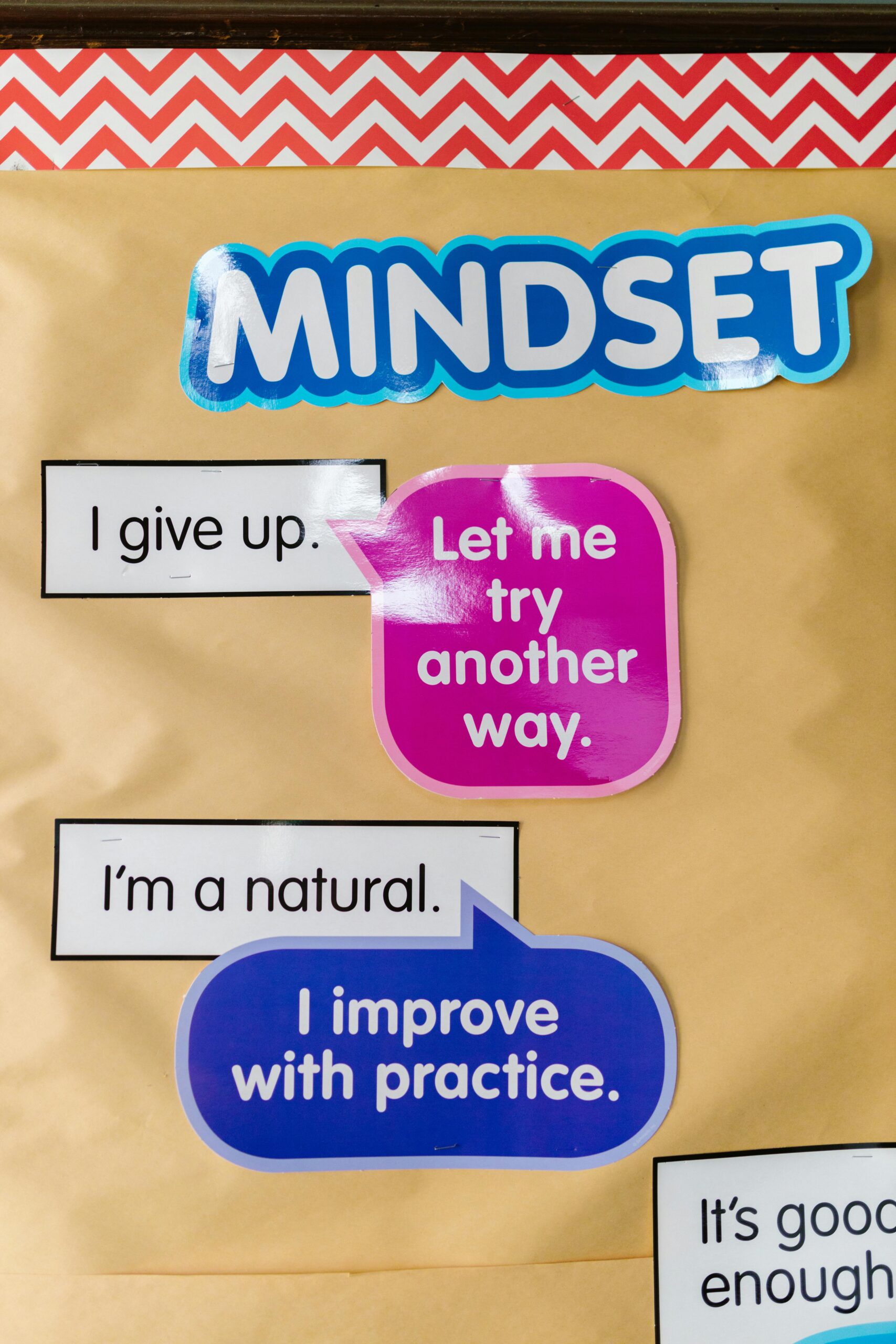
- Reframe the task as practice, not performance
Small wins begin to shift the internal narrative from “I can’t” to “maybe I can.”
Citation – Luman, M., Tripp, G., & Scheres, A. (2010). Identifying the neurobiology of altered reinforcement sensitivity in ADHD: A review and research agenda. Neuroscience & Biobehavioral Reviews, 34(5), 744–754.